What Is a Commode? Your Guide to Antique Commode Furniture
September 5, 2026 BY Carrocel Interiors
What Is a Commode in Furniture?
A commode in furniture is a decorative, low-profile chest of drawers or storage cabinet, traditionally associated with French and European cabinetmaking. Unlike the modern bathroom meaning of the word, a furniture commode is designed for refined storage and display.
Often distinguished by fine veneers, shaped fronts, decorative hardware, and marble or stone tops, the commode can be both functional and highly architectural. Today, a commode chest of drawers can bring the craftsmanship and visual presence of traditional furniture into classic, transitional, and contemporary interiors.
The History and Origins of the Commode
The commode emerged as an important form of French cabinet furniture around the beginning of the 18th century. Among the earliest celebrated examples were pieces created by master cabinetmaker André-Charles Boulle for Louis XIV at the Grand Trianon at Versailles. By the 18th century, the commode had become one of the defining forms of French furniture.
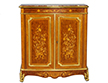
Its design evolved alongside changing French tastes. Early Louis XIV examples could be substantial and architectural, with elaborate marquetry and gilt-bronze ornament. Under Louis XV, forms became more fluid: serpentine and bombé fronts, cabriole legs, floral marquetry, and sculptural gilt-bronze mounts captured the movement of the Rococo period.
As Neoclassicism emerged during the Louis XVI era, commodes became more restrained and geometric. Straight lines, architectural motifs, tapered supports, carefully composed veneers, and marble tops brought a quieter sense of order. Transitional examples from the 1760s reveal this evolution particularly well, combining curved Rococo forms with increasingly classical decoration.
For collectors today, antique commode furniture offers more than storage. Each piece can preserve the cabinetmaking traditions, materials, proportions, and decorative vocabulary of its period.
Commode Furniture Styles: French, English, and Art Deco
Although closely associated with France, the commode has been interpreted across periods and design traditions. Its enduring appeal lies in that adaptability: a relatively compact piece of case furniture can become an expressive focal point through proportion, veneer, hardware, finish, and silhouette.
French Commode Styles
French commodes are perhaps the most recognizable. Louis XV designs favour movement, with curved or bombé cases, cabriole legs, intricate veneers, floral marquetry, and gilt-bronze mounts. Louis XVI examples tend toward symmetry and architectural restraint. Historic pieces demonstrate how premium veneers were integral to sophisticated cabinetmaking, allowing artisans to compose intricate patterns and control the direction and visual rhythm of the wood grain.
For those exploring French commode furniture in Toronto, these details can help distinguish a thoughtfully made piece from one that simply borrows a period silhouette.
English and Chinoiserie Commodes
English cabinetmakers interpreted the commode through their own traditions while drawing inspiration from fashionable French design. An English commode might feature restrained proportions, finely executed marquetry, or decorative influences from continental Europe and Asia. An example made for Croome Court in 1764 was specifically described as being in the French manner, illustrating the movement of the form beyond France.
These influences are particularly compelling in interiors where historical references are layered rather than matched.
Art Deco Commodes
Art Deco interpretations shift the emphasis from Rococo ornament toward geometry, material contrast, and a more streamlined silhouette. Rich veneers, lacquered surfaces, polished metal accents, and dramatic grain patterns can give the form a distinctly modern presence.
Within Carrocel Original and Carrocel Revival, collectors and designers can explore distinctive furniture spanning vintage, antique, and contemporary design perspectives.
How to Place a Commode in a Modern Interior
The beauty of luxury commode furniture is its ability to give a room presence without overwhelming it. Its relatively low proportions make the form particularly versatile.
In an entryway, a commode can create an architectural anchor beneath a mirror or artwork while providing concealed storage. In a bedroom, it can offer a more individual alternative to conventional case furniture. Within a dining or living room, an antique commode can introduce history, texture, and visual contrast alongside contemporary upholstery and lighting.
The most compelling compositions often come from contrast rather than strict coordination. A richly figured wood veneer can sit beautifully against quiet neutral textiles; gilt-bronze details gain definition beside stone, glass, or softly textured walls; and a lacquered surface can provide a polished counterpoint to natural materials.
For interiors requiring different proportions or storage configurations, Carrocel’s collection of chests offers another way to introduce functional case furniture with character.
What to Look for When Sourcing an Antique Commode
When considering antique commode furniture, look beyond surface appearance. Quality is revealed through the relationship between construction, materials, hardware, proportion, and condition.
Examine drawers and joints for stability and signs of thoughtful construction. Consider the condition of veneers and marquetry, including previous repairs or lifting. Hardware should also be assessed in context: replacement pulls or mounts do not automatically diminish a piece, but understanding what is original, restored, or later-added helps establish its character.
Premium veneer should never be mistaken for an indication of lesser quality. Historically, veneers allowed accomplished cabinetmakers to work with rare woods and create elaborate grain patterns, parquetry, and marquetry that would be difficult to achieve through solid timber alone. Museum examples of important 18th-century French commodes demonstrate extensive use of tulipwood, kingwood, amaranth, mahogany, and other fine veneers.
At Carrocel, antique and vintage commodes may also benefit from the expertise behind Carrocel Revival, where restoration is approached with respect for a piece’s history while considering its beauty, integrity, and function in contemporary interiors.
Frequently Asked Questions About Commode Furniture
A commode is a type of storage furniture closely related to a chest of drawers, but the term traditionally refers to a lower, more decorative European form. Commodes are often distinguished by shaped cases, fine veneers, decorative mounts, and stone or marble tops.
Explore Carrocel’s broader collection of dressers and chests to compare related forms.
Yes. Antique, vintage, and contemporary commodes work particularly well in considered modern interiors because they combine practical storage with a strong decorative presence. Their scale makes them suitable for entryways, bedrooms, dining rooms, and sophisticated living spaces.
Yes. Carrocel offers a curated selection of commodes in Toronto, including distinctive antique, vintage, restored, and design-led pieces. Inventory evolves as one-of-a-kind furniture enters the collection, giving designers, collectors, and homeowners opportunities to discover pieces with individual character.
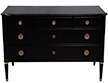
Antique Louis XVI French Marble Top Commode Chest
Restored in a hand-polished black lacquer finish
Features a smoky black stone top with white and grey veining
Experience a One-of-a-Kind Collection of Fine Furniture
Our 40,000 square-foot showroom in Toronto will captivate you time and time again with its sweeping displays of high-end original and custom furniture.